Top-rated independent appliance repair across Colorado
Dryer Repair — Book a Visit Today
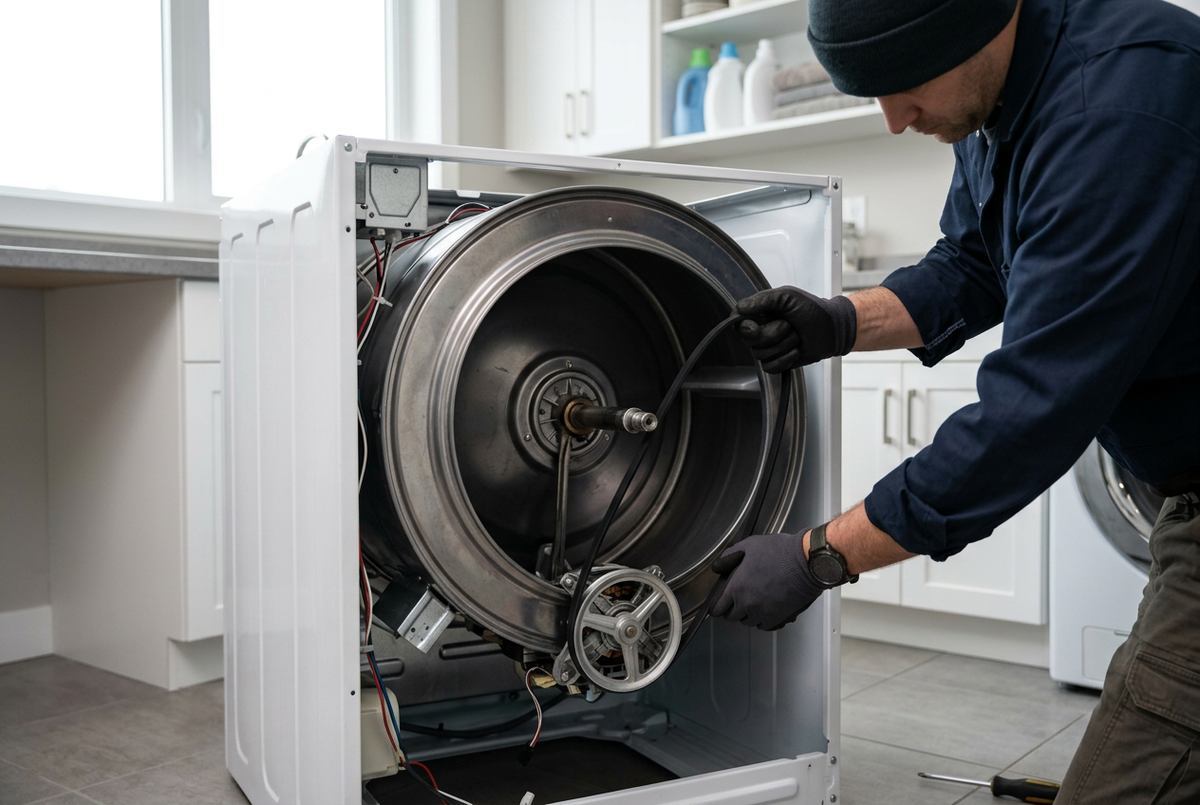
We repair residential dryers across Denver, gas and electric, and a visit starts at the exhaust path. Dryers work harder here. Thin air at altitude carries less heat, and our dry climate pulls static into every load, so a small vent restriction turns into two-hour drying cycles fast. The failures we see most: worn drum belts, burned-out heating elements, dead thermal fuses, clogged blower wheels, failed thermostats, and door switches that no longer latch the cycle. We check airflow at the wall first, then move inside the cabinet to test heat, motor, and safety switches. Gas units get a burner and igniter inspection too. Before any work begins, we explain what failed and what parts the repair needs. Call us to book a look at your machine.
Call (888) 352-5066- Real people on the phone
- 7 days a week
- Quote in writing before any work
Taking calls until 5:00 PM MT
The dryer symptoms we hear most
- Clothes come out damp after two full cycles Blocked vent line, lint-packed blower wheel, or restricted exhaust hood
- Drum spins but everything stays cold Failed heating element, open thermal fuse, or bad high-limit thermostat
- There's a screech every time it turns Worn drum rollers, dry idler pulley, or failing rear bearing
- Push start and nothing happens at all Broken door switch, start switch, or interrupted power to the outlet
- Smells hot, almost scorched, mid-cycle Lint buildup near the element or a cycling thermostat stuck closed
Safe things to check first
Worth a look before you call — sometimes it saves you the visit.
- 1Pull the lint screen and clean it, then hold it under running water and watch whether the water drains freely instead of pooling.
- 2Step outside and confirm the exhaust hood flap opens while the dryer runs.
- 3Reset the breaker for the dryer circuit once, since electric models use a double breaker and half of it can trip.
- 4Open and shut the door firmly to see whether the latch clicks and the drum light responds.
Why homeowners pick a local independent shop
| V-Hood Denver | Big-box repair chains | Handyman listings | |
|---|---|---|---|
| Written quote before any work | ✓ | ✕ | ✕ |
| Phones answered by people, every day | ✓ | ✕ | ✓ |
| Gas and electric, all major brands | ✓ | ✓ | ✕ |
| Independent shop, nobody's quota | ✓ | ✕ | ✓ |
| Local techs who know the housing stock | ✓ | ✕ | ✓ |
After the visit, in their words
“The tech talked me OUT of a repair that would not have lasted. You do not forget that kind of honesty.”
Art B.Burlington, CO“Washer error code meant nothing to me. He knew it on sight and had it cleared in under an hour.”
June C.Genesee, CO“Polite on the phone, polite at the door, and the laundry room was cleaner when he left than when he came.”
Earl D.Lincoln Park, CODryer Repair — quick answers
Why does my dryer take so long in Colorado?
Lower air density at altitude means each cubic foot of air carries less moisture away. Add a partly clogged vent and cycle times stretch badly. Clearing the duct usually helps most. If heat is weak too, the element or thermostat needs testing.
Is a long vent run a real problem?
Yes. Every elbow and every extra foot adds resistance. Long runs collect lint faster and slow drying down. Some homes route ducts through crawlspaces where condensation forms. We measure airflow and point out the sections that need cleaning or rerouting.
Can you work on gas dryers?
We do. Gas models add an igniter, gas valve coils, and a flame sensor to the list of parts that fail. No-heat calls on gas units often trace back to coils or a weak igniter. We test each part before replacing anything.
Should I repair or replace an older dryer?
Depends on the failure. Belts, rollers, switches, and fuses are straightforward repairs on machines that otherwise run well. A failed motor or a rusted-through drum on a very old unit is a different conversation. We tell you what we find.
How long does a typical repair take?
Many jobs finish in one visit when the part is a common one we carry. Control boards and model-specific components may need ordering. At diagnosis we let you know which situation you're in, so you can plan laundry around it.
What should I do before you arrive?
Clear a few feet in front of and beside the machine so we can pull it out. Empty the drum. If it's a stacked unit or sitting in a tight closet, mention that when you call us so we bring the right tools.
How it works
- Step 1
Tell us the symptom
Call or fill out the form and describe the noise, the smell, or the error code. Tell us your altitude and whether the unit vents outside. Those small details decide which parts ride along on the van.
- Step 2
We diagnose on site
A technician looks at the appliance right there in your kitchen or laundry room. We test airflow, heat, drainage, and the electrical side. Then we explain the fault in plain words and lay out your repair options before a wrench comes out.
- Step 3
Repair and airflow check
Once you approve it, we do the work. Before we pack up, we run the appliance and confirm it vents, drains, and cycles the way it should. We clean up the area, then tell you what to keep an eye on next season.
- A real person answers
- Open 7 days
- Written quote before work starts
Why homeowners call us
- Rooted in kitchen ventilationHoods, ducts, and blower motors are where this shop started, and the habit stuck. We look at how air moves through your dryer vent, your fridge coils, your dishwasher drain. Blocked airflow causes more breakdowns than bad parts do.
- Built for thin, dry airColorado altitude changes how burners fire and how moisture leaves a room. Dry air also cracks gaskets and dries seals out early. We account for both when we diagnose, instead of treating your home like it sits at sea level.
- Independent and directWe are an independent repair company and we work on all major brands. No script, no upsell theater. If a repair does not make sense for the age of the machine, we say so out loud and let you decide.
- Clear talk, clean workYou get the fault explained in words you can repeat to your spouse. Drop cloths go down, we respect your floors, and dust from vent work gets vacuumed up before we leave the kitchen.
- All major brands, gas & electricIndependent service on Whirlpool, LG, Samsung, GE, Maytag, Bosch, KitchenAid and the rest.
- Straight answersNot worth fixing? We say that out loud, and often it saves you the visit fee.
Dryer Repair
Small faults become big ones on a schedule of their own
Describe the symptoms and we'll book the visit — takes about a minute.
- A real person answers
- Open 7 days
- Written quotes
- All major brands
- Gas & electric
Rather not call? Get a free quote →