Top-rated independent appliance repair across Colorado
Stove & Range Repair — Book a Visit Today
We repair gas, electric, and induction ranges in Denver homes, so call us and tell us what the stove is doing. Most failures are ordinary. A surface element quits, the oven runs cold or browns one side, an igniter clicks without ever lighting, touch controls go dead, a knob spins loose. On gas ranges we check igniters and valves along with burner ports packed with old spillover. On electric and induction we test elements, relay boards, and the wiring behind the range. The visit starts with questions about what you saw and smelled, then meter readings instead of guesswork. We pull the range out, look at the connection, and explain what the part is doing wrong before we replace anything. Denver kitchens also deal with dry air and dusty vents, and we look at that while we are back there.
Call (888) 352-5066- Real people on the phone
- 7 days a week
- Quote in writing before any work
Taking calls until 5:00 PM MT
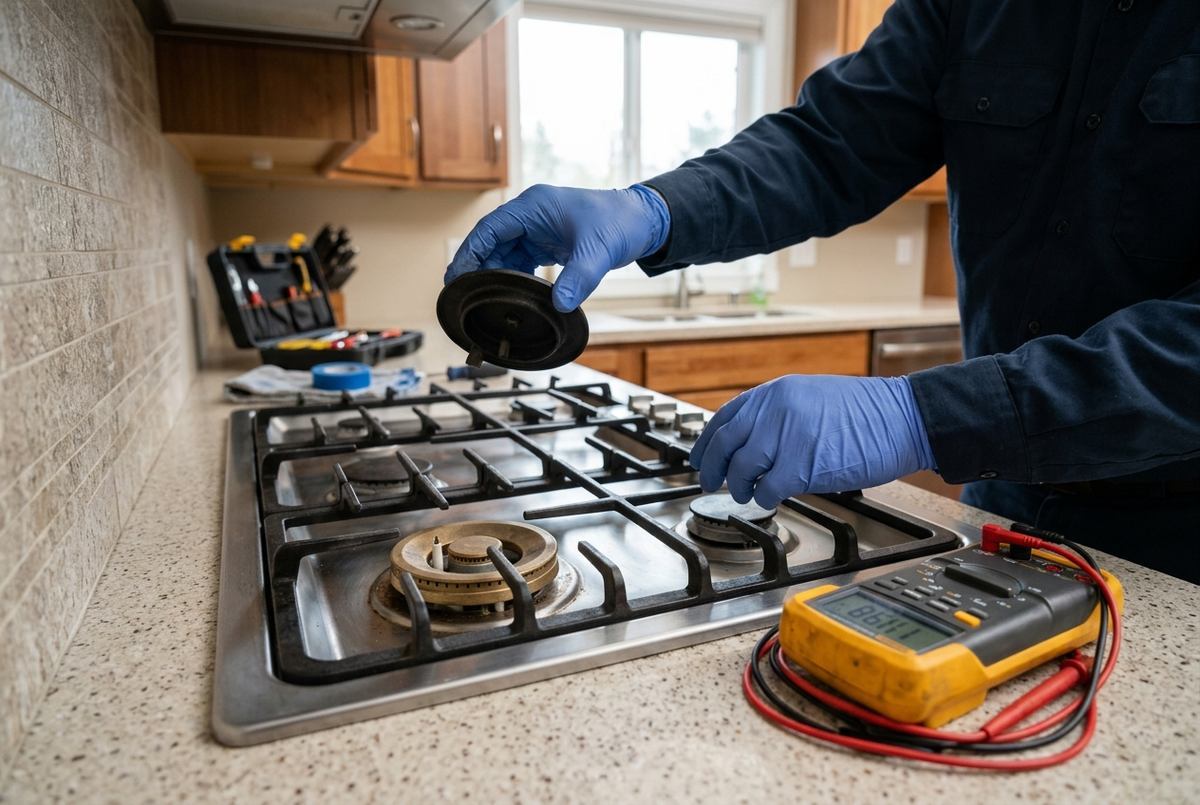
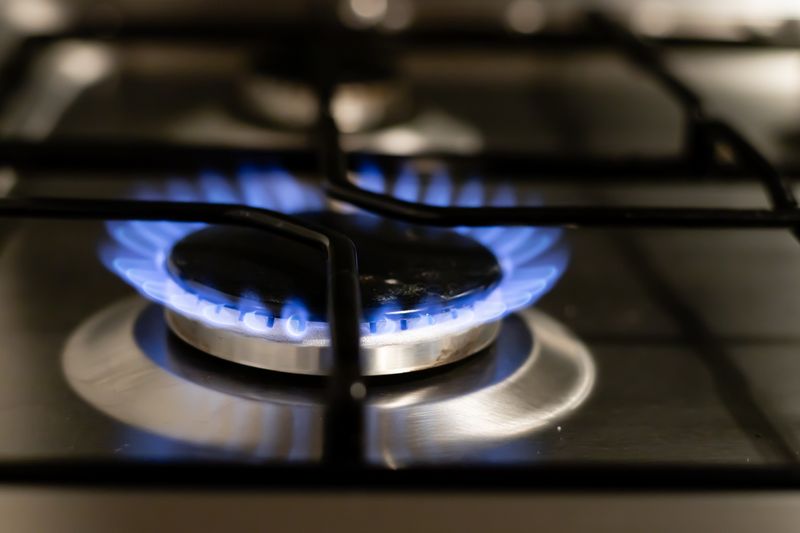
The stove & range symptoms we hear most
- "It clicks but never lights" Spark igniter, clogged burner port, or a weak gas valve
- "Oven says 350 but my cookies burn" Drifting temperature sensor or a miscalibrated control board
- "One burner is dead, the rest work" Failed surface element, burnt receptacle, or broken switch
- "Whole cooktop went dark at once" Tripped breaker, loose 240V connection, or main control failure
- "Smells like gas near the range" Loose fitting or valve leak. Shut it off and call before using it
Safe things to check first
Worth a look before you call — sometimes it saves you the visit.
- 1Flip the kitchen breaker off and back on, since a range often uses a double breaker and only half may have tripped.
- 2Look at the burner ports on a gas cooktop for crusted food or standing spill that blocks the flame path.
- 3Make sure the oven is not stuck in Sabbath, delay-start, or control-lock mode from an accidental button press.
- 4Check that the range is pushed in fully and the plug or gas line was not bumped during cleaning.
Why homeowners pick a local independent shop
| V-Hood Denver | Big-box repair chains | Handyman listings | |
|---|---|---|---|
| Written quote before any work | ✓ | ✕ | ✕ |
| Phones answered by people, every day | ✓ | ✕ | ✓ |
| Gas and electric, all major brands | ✓ | ✓ | ✕ |
| Independent shop, nobody's quota | ✓ | ✕ | ✓ |
| Local techs who know the housing stock | ✓ | ✕ | ✓ |
After the visit, in their words
“They said morning, they meant morning. The quote said one number, the card ran that number.”
Faye D.Burlington, CO“Ice maker leak had warped the floor before we noticed. They fixed the valve and pointed us to a floor guy. Above and beyond.”
Kurt V.Genesee, CO“The person on the phone asked for the model plate ahead of time so the visit came stocked.”
Lena R.Lincoln Park, COStove & Range Repair — quick answers
Is a range that won't light dangerous to keep trying?
Repeated clicking with no flame lets gas collect. Stop, open a window, and leave the burner off. If you smell gas at all, shut the supply valve and step outside before calling us.
Can you fix both gas and electric ranges?
Yes. We work on gas, electric coil, smooth-top radiant, induction, and dual-fuel ranges. Each type fails differently, so we bring test tools for burner ignition circuits and for high-voltage element and board diagnosis.
Why does my oven bake unevenly?
Usually the temperature sensor has drifted, or the bake element or burner is only partly working. Warped racks and a blocked convection fan matter too. We measure the actual cavity temperature instead of trusting the display.
Do you repair the brand I own?
We are an independent shop and service all major residential brands. Tell us the brand and model when you call, plus the symptom, so we arrive with the likely parts and the right diagnostic approach.
My glass cooktop is cracked. Is that repairable?
A cracked ceramic top should not be used, since spills reach live wiring underneath. Replacement glass is available for many models. We inspect the frame and the elements below to confirm nothing else was damaged.
How long does a typical stove repair take?
Many jobs finish in one visit once we confirm the failed part. Diagnosis is the slow half. If a control board or glass top has to be ordered for your model, we schedule a short return trip.
How it works
- Step 1
Tell us the symptom
Call or fill out the form and describe the noise, the smell, or the error code. Tell us your altitude and whether the unit vents outside. Those small details decide which parts ride along on the van.
- Step 2
We diagnose on site
A technician looks at the appliance right there in your kitchen or laundry room. We test airflow, heat, drainage, and the electrical side. Then we explain the fault in plain words and lay out your repair options before a wrench comes out.
- Step 3
Repair and airflow check
Once you approve it, we do the work. Before we pack up, we run the appliance and confirm it vents, drains, and cycles the way it should. We clean up the area, then tell you what to keep an eye on next season.
- A real person answers
- Open 7 days
- Written quote before work starts
Why homeowners call us
- Rooted in kitchen ventilationHoods, ducts, and blower motors are where this shop started, and the habit stuck. We look at how air moves through your dryer vent, your fridge coils, your dishwasher drain. Blocked airflow causes more breakdowns than bad parts do.
- Built for thin, dry airColorado altitude changes how burners fire and how moisture leaves a room. Dry air also cracks gaskets and dries seals out early. We account for both when we diagnose, instead of treating your home like it sits at sea level.
- Independent and directWe are an independent repair company and we work on all major brands. No script, no upsell theater. If a repair does not make sense for the age of the machine, we say so out loud and let you decide.
- Clear talk, clean workYou get the fault explained in words you can repeat to your spouse. Drop cloths go down, we respect your floors, and dust from vent work gets vacuumed up before we leave the kitchen.
- All major brands, gas & electricIndependent service on Whirlpool, LG, Samsung, GE, Maytag, Bosch, KitchenAid and the rest.
- Straight answersNot worth fixing? We say that out loud, and often it saves you the visit fee.
Stove & Range Repair
Small faults become big ones on a schedule of their own
Describe the symptoms and we'll book the visit — takes about a minute.
- A real person answers
- Open 7 days
- Written quotes
- All major brands
- Gas & electric
Rather not call? Get a free quote →